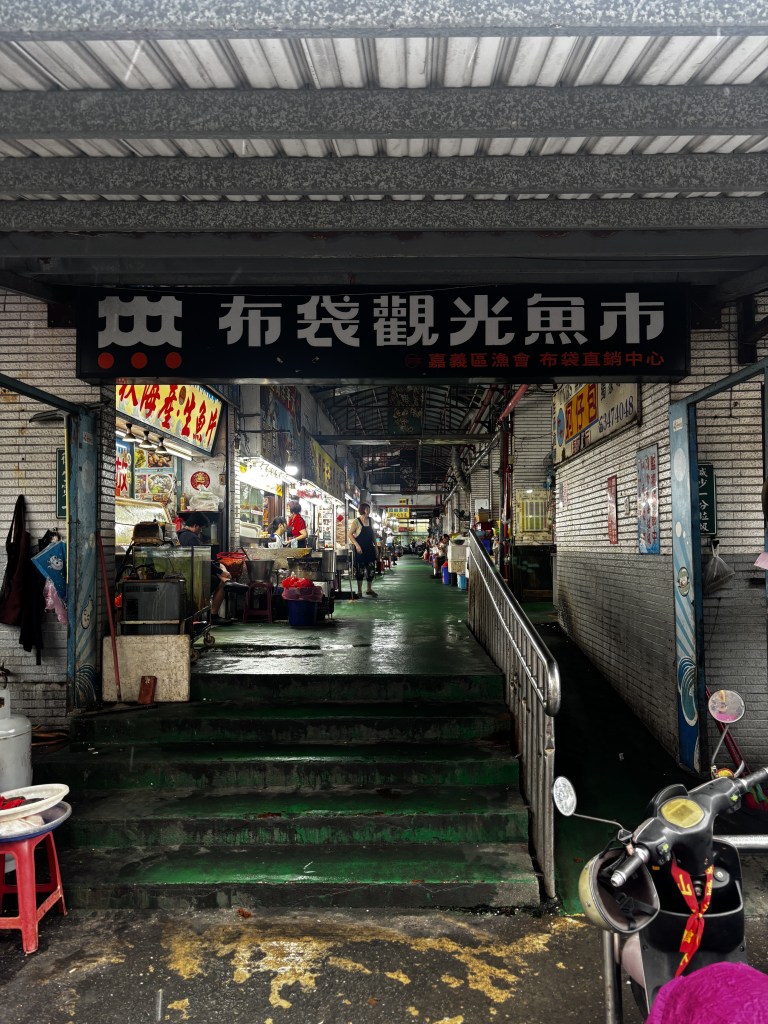
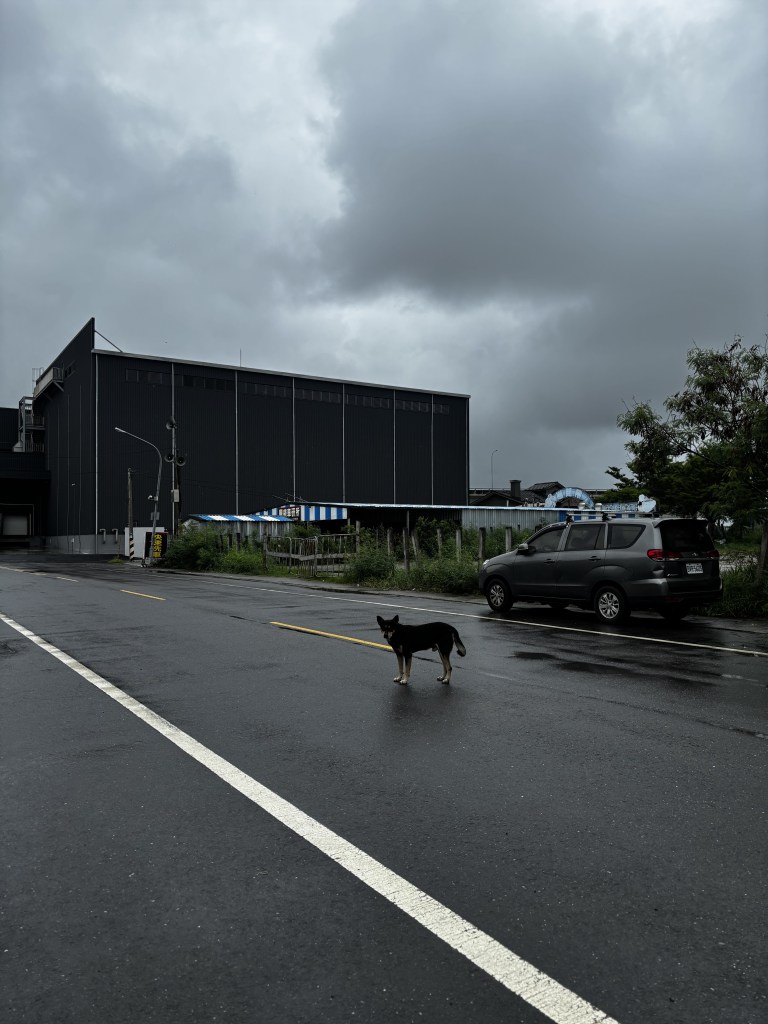
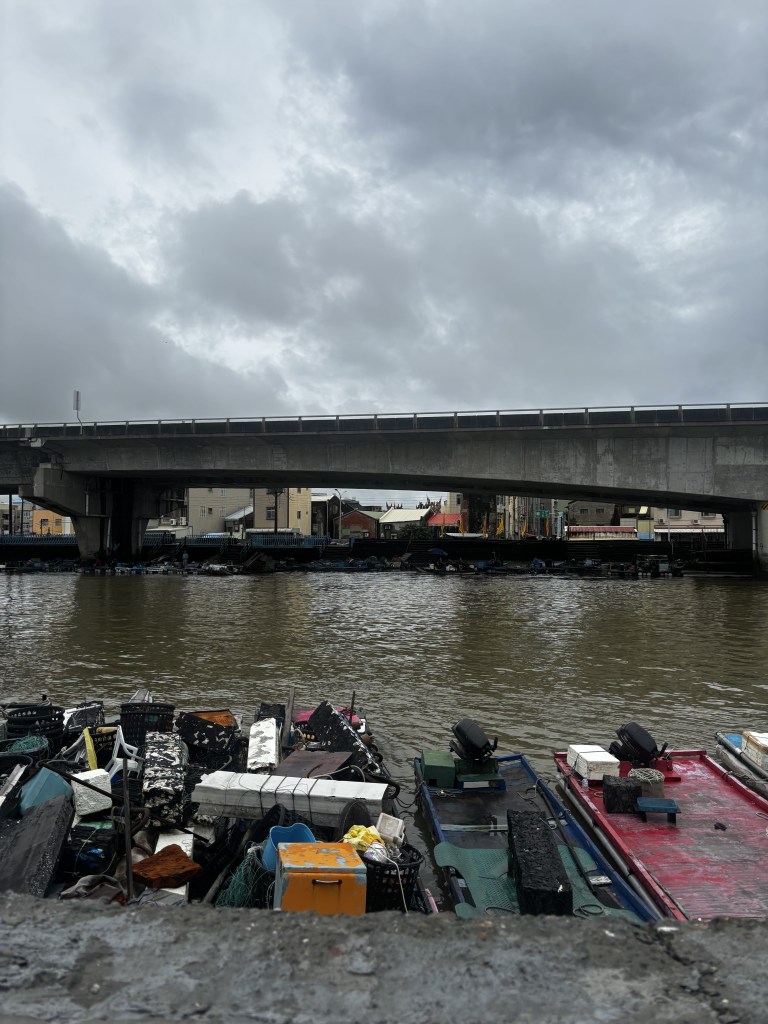
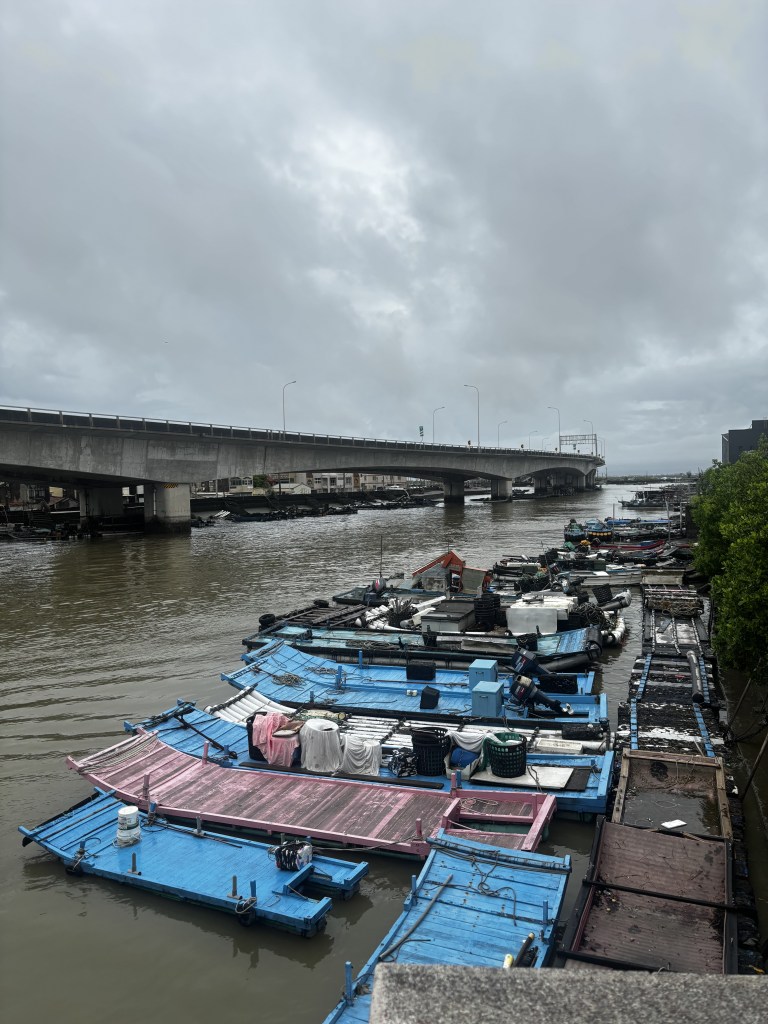
Heavy rain during my four-day stay in Budai restricted my movements to within a 15-minute walk of my hotel, which sits on reclaimed coastal land overlooking the fishing harbour. On my short walks around the area, I met several stray dogs, though none seemed curious about my presence.
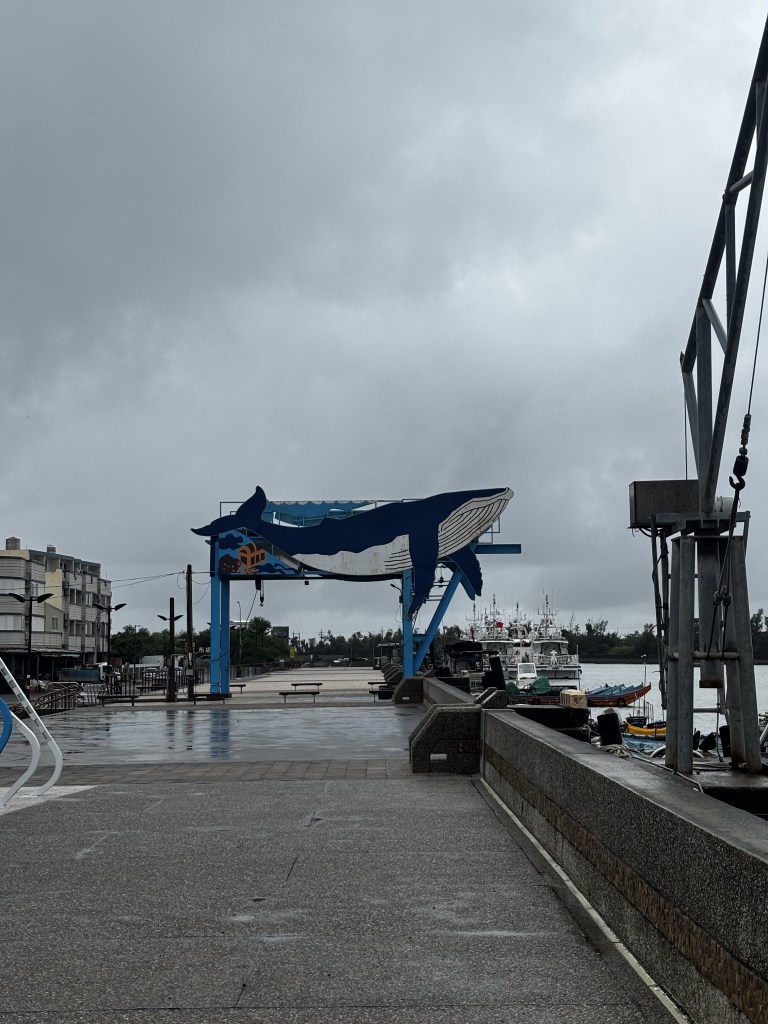
The coastline looked very different before the reclamation. The inland waters once linked the area around present-day Budai to trade routes, as early as the C17th when the Dutch East India Company included it in its maritime network. Later, increased salt production during the Qing and Japanese eras elevated Budai’s status as a key port for exporting salt to China and Japan. It flourished briefly after WW2, before salt exports eventually shifted to Kaohsiung in 1951.
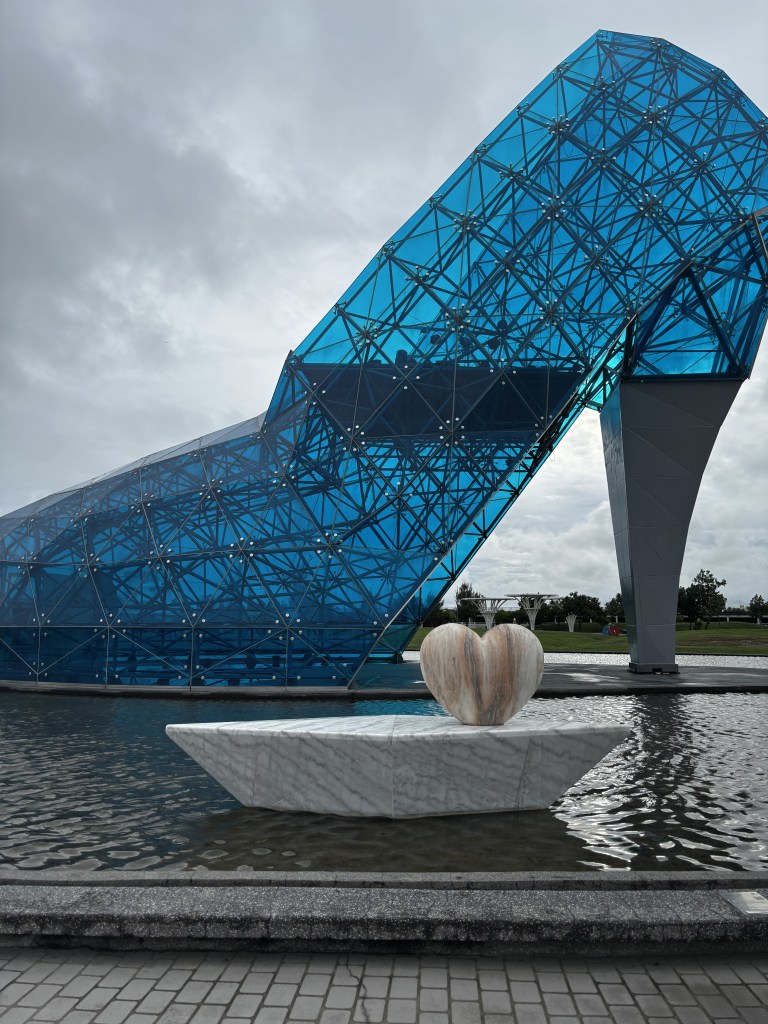
The furthest I went was to the High-Heel Wedding Church, recognized by Guinness World Records as the “largest building shaped like a shoe.” Large-scale salt production ended in 2001, bringing to a close an industry that had organized local employment and shaped daily life for generations. Since then, parts of the township have been repurposed as, among other things, solar farms and tourist attractions. The church is part of this attempt at tourism-led regeneration. Although iconic, I found it underwhelming (the interior was empty) and unapologetically out of place.